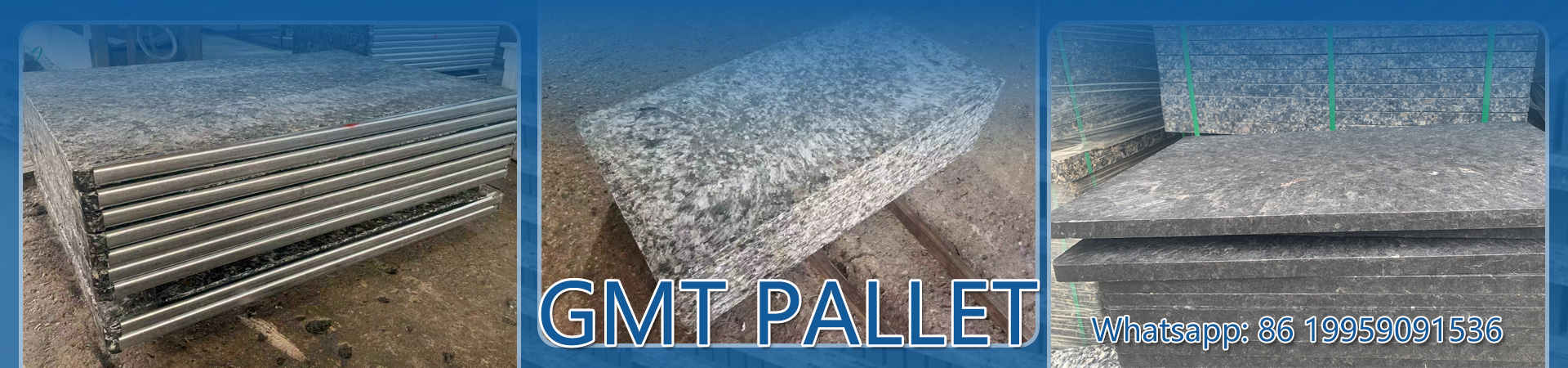
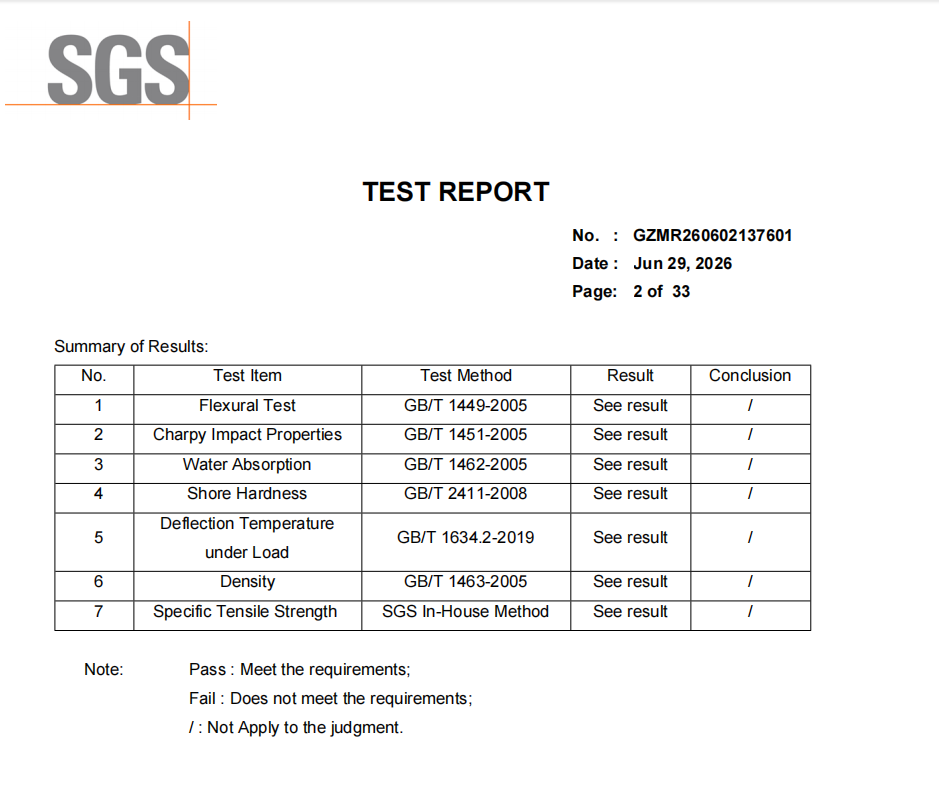
Laboratory Testing of GMT Pallet Materials
When customers search for a GMT pallet manufacturer, block machine pallet supplier, or fiberglass pallet factory, they are often looking for more than a product photograph and a price.
For a concrete block production line, the pallet is repeatedly exposed to vibration, loading, stacking, transportation, forklift handling, wet concrete, and curing conditions. Therefore, the mechanical properties and material composition of a concrete block pallet can have an important influence on its suitability for long-term production.
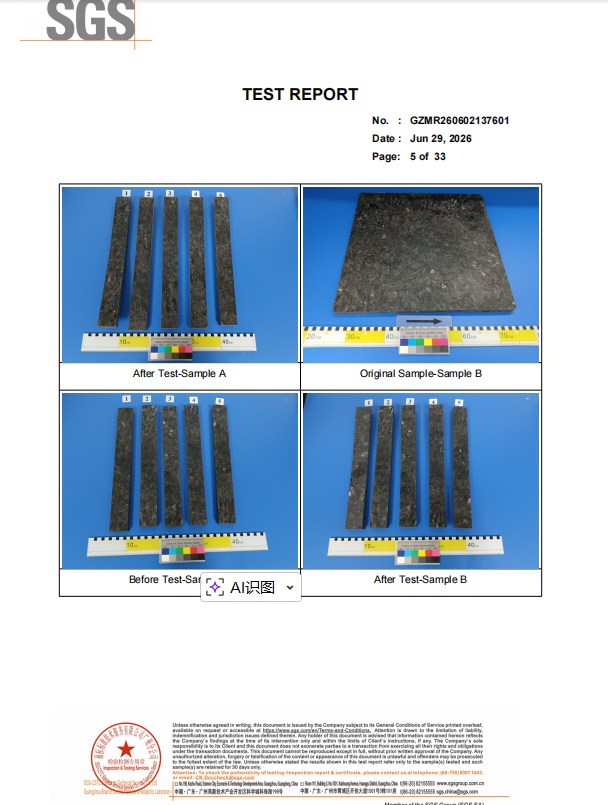
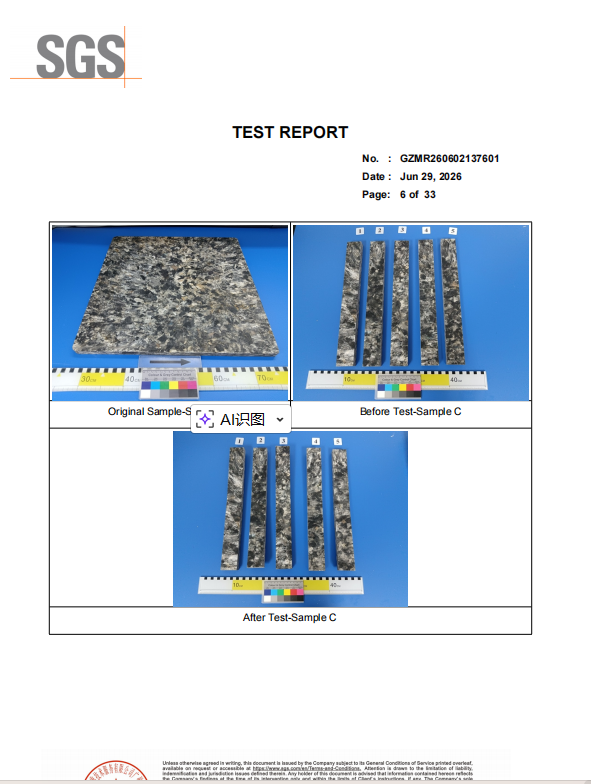
To provide measurable technical information, three different GMT pallet formulations were evaluated:
• 30% Black Fiberglass GMT Pallet
• 50% Black Fiberglass GMT Pallet
• 50% White Fiberglass GMT Pallet
The testing provides a useful reference for customers comparing different GMT pallets for block machines, especially when the main concern is bending, strength, moisture resistance, or overall material performance.
GMT Pallet Bending Resistance and Flexural Modulus
One of the most common questions from concrete block manufacturers is:
“Which GMT pallet is better for reducing bending?”
For this question, flexural modulus is an important technical parameter to consider. It describes the material's resistance to deformation during bending and is therefore highly relevant when evaluating the rigidity of a block machine pallet.
The tested flexural modulus results were:
• 30% Black Fiberglass: 2260 MPa
• 50% Black Fiberglass: 2810 MPa
• 50% White Fiberglass: 2800 MPa
The 50% Black and 50% White GMT pallet materials showed very similar flexural modulus results, with only a 10 MPa difference.
This means that, based on these tested samples, customers comparing 50% black GMT pallet vs 50% white GMT pallet should not expect a major difference in bending stiffness from flexural modulus alone.
For customers searching for a GMT pallet for automatic block machine production, large-size pallet, or heavy concrete products, flexural performance should be considered together with pallet thickness, pallet dimensions, product weight, machine vibration, production speed, and handling conditions.
For applications where lower bending deformation is a major requirement, a higher fiberglass-content formulation such as 70% can be considered. However, the 70% formulation was not included in this laboratory test, so its performance should be confirmed separately rather than being presented as a result of this report.
Flexural Strength of Fiberglass Block Machine Pallets
Flexural strength measures the stress a material can withstand during the flexural test before failure.
The measured results were:
• 30% Black Fiberglass: 15.9 MPa
• 50% Black Fiberglass: 24.0 MPa
• 50% White Fiberglass: 24.1 MPa
The 50% Black and 50% White samples again showed very similar results.
For buyers searching for a strong fiberglass pallet for concrete blocks, this data provides another useful reference. However, actual pallet performance is not determined by material test results alone. Pallet dimensions, thickness, structural design, block weight, machine model, and production environment also need to be considered.
This is particularly important for large-format concrete block pallets, paver pallets, and pallets used on high-speed automatic production lines.
Water Absorption of GMT Pallets
Concrete block pallets may operate in environments where moisture is unavoidable. Wet concrete materials, cleaning water, curing rooms, rain, and humid factory conditions can all expose a pallet to moisture.
The laboratory water absorption results were:
• 30% Black Fiberglass: 1.90%
• 50% Black Fiberglass: 1.05%
• 50% White Fiberglass: 0.98%
The 50% White sample recorded the lowest water absorption among the three tested formulations, followed closely by the 50% Black sample.
For customers searching for a water-resistant GMT pallet, fiberglass block pallet, or GMT pallet for humid production environments, water absorption is therefore an important technical specification to consider.
However, laboratory water absorption should not be directly interpreted as a complete prediction of pallet service life. Actual service life depends on production frequency, temperature, moisture, handling, storage, and other working conditions.
GMT Pallet Hardness vs Bending Performance
Another common search and purchasing question is whether a harder pallet is automatically a better pallet.
The Shore D hardness results were:
• 30% Black Fiberglass: Shore D 70
• 50% Black Fiberglass: Shore D 72
• 50% White Fiberglass: Shore D 74
Hardness is useful for evaluating surface resistance to indentation, but hardness and bending stiffness are not the same property.
If a customer is mainly concerned about GMT pallet bending, pallet deformation, or stiffness during block production, flexural modulus should receive more attention than Shore hardness.
If the concern is surface indentation or hardness, Shore D provides useful information.
This distinction can help concrete block manufacturers choose a block machine pallet based on the actual production problem instead of comparing suppliers only by hardness values.
Thermal Performance of GMT Pallets
The test also included deflection temperature under load.
The measured values were:
• 30% Black Fiberglass: 62°C
• 50% Black Fiberglass: 70°C
• 50% White Fiberglass: 62°C
The 50% Black sample recorded the highest value in this particular test.
For customers searching for a GMT pallet for curing chamber, concrete block pallet for hot production conditions, or a pallet suitable for demanding factory environments, this test provides additional material information.
The deflection temperature under load is a laboratory test result under specified conditions. It should not be treated as the continuous operating temperature of a GMT pallet.
Actual application temperatures, curing methods, pallet loading, exposure time, and production conditions should all be evaluated before selecting a pallet material.
Impact Strength and GMT Pallet Durability
Impact strength was also tested as part of the material evaluation.
The results were:
• 30% Black Fiberglass: 12.4 kJ/m²
• 50% Black Fiberglass: 6.10 kJ/m²
• 50% White Fiberglass: 6.68 kJ/m²
Impact performance can be relevant when pallets are subjected to handling, transportation, stacking, or accidental impact during factory operations.
For a durable concrete block pallet, however, impact strength should not be considered independently. Buyers should evaluate the complete set of mechanical and physical properties together with the actual pallet application.
GMT Pallet Density and Material Performance
Density testing produced the following results:
• 30% Black Fiberglass: 1170 kg/m³
• 50% Black Fiberglass: 1190 kg/m³
• 50% White Fiberglass: 1240 kg/m³
Specific tensile strength was also evaluated:
• 30% Black Fiberglass: approximately 561
• 50% Black Fiberglass: approximately 772
• 50% White Fiberglass: approximately 725
These measurements give buyers additional information when comparing fiberglass GMT pallet materials from different suppliers.
For international buyers, comparing several technical properties can be more useful than simply asking for the lowest GMT pallet price.
30%, 50%, or 70% GMT Pallet – How to Choose?
Customers often search online for:
“30% vs 50% GMT pallet”
“50% black vs 50% white GMT pallet”
“70% fiberglass GMT pallet”
“Which pallet is suitable for my block machine?”
The answer depends on the production requirements.
A 30% Black GMT pallet can be considered when the main objective is cost control and the production conditions are relatively moderate.
A 50% GMT pallet offers a balance between material performance and purchasing cost. According to the laboratory results, the 50% Black and 50% White samples showed very similar flexural modulus and flexural strength.
A 70% GMT pallet can be considered for applications requiring a higher fiberglass content, particularly large-format pallets, heavier products, demanding automatic production lines, or situations where bending resistance is a major concern.
The 70% formulation was not tested in this particular SGS laboratory evaluation. Therefore, the test results presented on this page should not be used as numerical evidence for the 70% formulation.
GMT Pallet for Different Block Machines
The correct block machine pallet is also related to the machine model and pallet size.
Different equipment manufacturers and production lines may require different pallet dimensions, thicknesses, loading capacities, and material compositions.
GMT pallets can be designed for applications involving:
• Concrete block machines
• Brick making machines
• Paver block machines
• Curbstone production lines
• Hollow block machines
• Automatic concrete block production lines
• Precast concrete production
When requesting a quotation from a GMT pallet manufacturer, buyers should provide the machine model, pallet size, thickness, concrete product type, product weight, production speed, and curing conditions.
This information allows the supplier to recommend a more suitable fiberglass pallet instead of providing a standard product without considering the customer's production line.
GMT Pallet Manufacturer for Global Concrete Block Production
For international buyers, choosing a reliable GMT pallet supplier involves more than checking product photos.
A professional supplier should be able to provide material specifications, pallet dimensions, production information, quality inspection records, packaging details, loading information, and technical recommendations.
For customers importing GMT pallets from China, the supplier's production capability and export experience are also important considerations.
A factory with experience in different markets can better understand requirements for different block machines, pallet sizes, production environments, and shipping methods.
Technical testing can also provide buyers with measurable information when comparing different GMT pallet manufacturers.
Technical Data Helps Customers Make Better Pallet Decisions
There is no universal GMT pallet that is suitable for every concrete block factory.
The correct selection depends on the customer's production conditions, including:
• Block machine model
• Pallet dimensions
• Pallet thickness
• Concrete product weight
• Production speed
• Automatic or manual handling
• Curing temperature and humidity
• Forklift handling
• Storage conditions
• Expected service requirements
• Purchasing budget
For this reason, a professional block machine pallet supplier should evaluate the complete application before recommending a material composition.
Laboratory test data provides an additional technical reference, while the customer's actual production conditions determine which GMT pallet solution is appropriate.
Customized GMT Pallet Solutions
GMT pallets can be manufactured in different sizes, thicknesses, fiberglass contents, colors, and structural configurations according to the requirements of different production lines.
If you are looking for a GMT pallet manufacturer, concrete block pallet supplier, or fiberglass pallet factory, send us the following information:
Machine Model:
Pallet Size:
Pallet Thickness:
Concrete Product:
Approximate Product Weight:
Production Speed:
Curing Conditions:
Required Quantity:
Based on these details, we can recommend a suitable GMT pallet material and structure for your production line.
Whether you need a cost-effective 30% Black GMT pallet, a balanced 50% formulation, or a higher-fiberglass-content solution for demanding production conditions, our technical team can provide a customized recommendation and quotation.
Contact a GMT Pallet Manufacturer
If you are comparing GMT pallets, block machine pallets, fiberglass pallets, or concrete block pallets, contact us with your machine model and pallet specifications.
We can provide technical specifications, material options, pallet dimensions, loading information, packaging details, and a quotation based on your actual production requirements.
Choose the GMT pallet according to your machine, product, working conditions, and performance requirements—not simply according to price.